
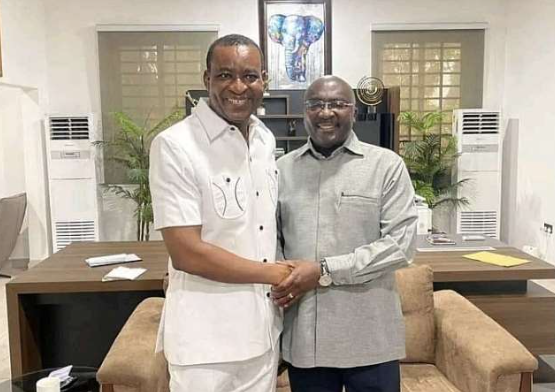
New Patriotic Party (NPP) presidential candidate for the 2028 general election, Dr Mahamudu Bawumia, on Wednesday paid a visit to the party’s Ashanti Regional Chairman, Bernard Antwi Boasiako, widely known as Chairman Wontumi, at the Nsawam Medium Security Prison after his conviction in the Akonta Mining illegal mining case.
The visit followed Monday’s High Court ruling in Accra, which sentenced Chairman Wontumi to 20 years in prison on each of two counts, with both sentences to run concurrently.
READ ALSO: Wontumi still faces 2 major court cases despite 20-year jail sentence
The NPP described the visit as part of its response to what it believes is an unfair judgment, insisting that the conviction represents political persecution rather than justice.
As the party’s leader and 2028 flagbearer, Dr Bawumia visited Wontumi to express support, check on his well-being, and reassure him of the party’s commitment to challenging the verdict through the courts.
During the meeting, Dr Bawumia reportedly pledged that the NPP would exhaust every legal option available to overturn the conviction. He has also directed the party’s legal team to work alongside lead counsel Samuel Atta Akyea in preparing an appeal.
Mr Atta Akyea, who was expected back in Ghana on Wednesday evening, is anticipated to file the appeal in the coming days.
READ ALSO: NPP reacts to Wontumi’s 20-year sentence
Chairman Wontumi was found guilty by the High Court on July 20 and sentenced to 20 years’ imprisonment on each of two charges, with the sentences running at the same time. The court also imposed fines of 10,000 penalty units for each count.
Akonta Mining Limited, which stood trial alongside Wontumi, was also convicted on two counts and ordered to pay fines totaling 15,000 penalty units.
Before delivering its final judgment, the court rejected an application by the defence requesting that constitutional issues arising from the case be referred to the Supreme Court for interpretation.
Justice Audrey Kocuvie-Tay ruled that the application lacked sufficient merit and proceeded with the judgment.
Following the verdict, Samuel Atta Akyea criticized the court’s refusal to refer the constitutional questions to the Supreme Court and confirmed that the defence would challenge the conviction through an appeal.