
The FIFA World Cup represents the pinnacle of international football a global spectacle where careers are defined, legends are created, and the greatest players leave lasting marks on the sport’s history.
From Pelé’s unforgettable performances in 1958 to Diego Maradona’s iconic moments in 1986, from Zinedine Zidane’s brilliance in 1998 to Cristiano Ronaldo’s emotional World Cup journeys, the tournament has long been regarded as the ultimate test of a footballer’s greatness.
Yet football is not always fair.
While some of the sport’s greatest stars have enjoyed the privilege of competing on the world’s biggest stage, others, despite their extraordinary talent, never had the opportunity.
READ ALSO: FIFA World Cup: The Match that almost started a war
Injuries, political circumstances, national team struggles, administrative complications, and tragic events denied several football icons a chance to participate in the World Cup.
Here are ten of the greatest footballers in history who never appeared in a FIFA World Cup match.
1. Alfredo Di Stéfano (Argentina/Colombia/Spain)
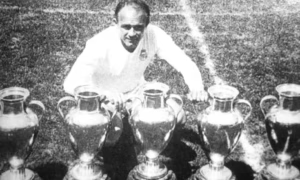
Widely regarded as the greatest player never to feature at a World Cup, Alfredo Di Stéfano’s absence remains one of football’s greatest injustices.
The Real Madrid legend scored 308 goals in 396 appearances and played a central role in the club’s dominance of European football during the 1950s and early 1960s.
A combination of circumstances repeatedly prevented him from reaching the tournament. Argentina did not participate in the 1950 World Cup, while eligibility complications stemming from his appearances for Argentina and Colombia ruled him out in 1954.
After switching allegiance to Spain, he saw the nation fail to qualify for the 1958 edition. When Spain eventually reached the 1962 tournament, injury forced him out. As a result, one of football’s most influential players never played a single World Cup match.
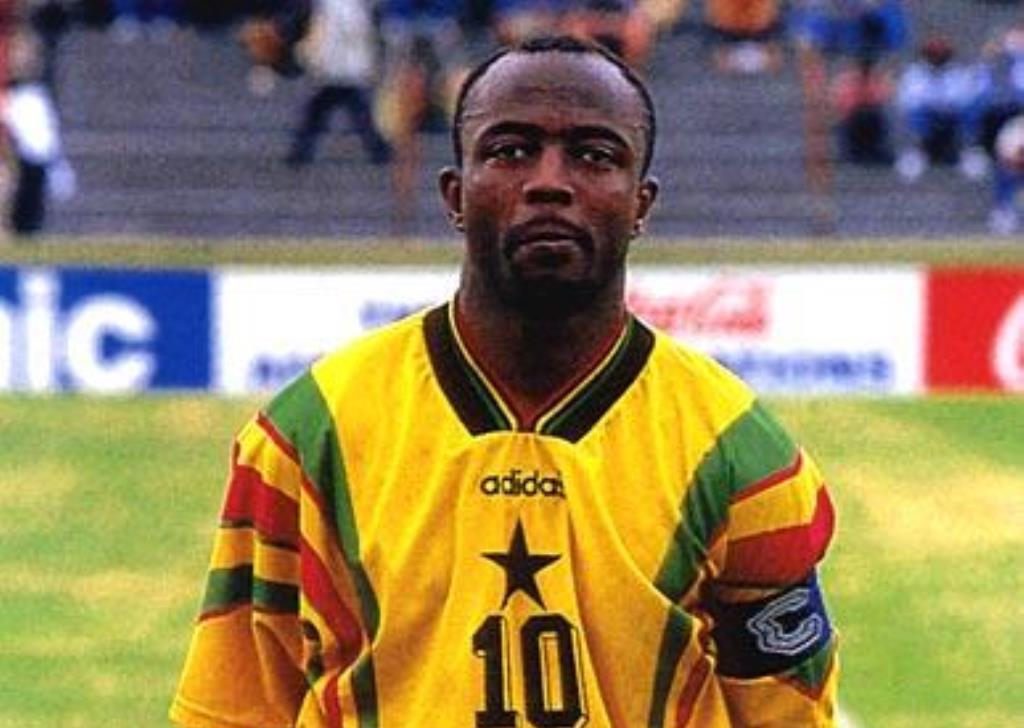
2. Abedi Ayew “Pelé” (Ghana)

Abedi Pelé stands among Africa’s most celebrated footballers. The Ghanaian midfielder won the African Footballer of the Year award three consecutive times between 1991 and 1993 and became one of the continent’s first true stars in European club football.
A UEFA Champions League winner with Marseille, an Africa Cup of Nations champion with Ghana, and a member of Pelé’s FIFA 100 list, Abedi enjoyed a remarkable career.
READ ALSO: What is happening with World Cup ticket prices?
He formed part of Marseille’s legendary attacking unit alongside Jean-Pierre Papin and Chris Waddle, helping the French giants secure multiple league titles before conquering Europe in 1993.
Despite his achievements, Ghana failed to qualify for the World Cup throughout his playing career. Many consider his dazzling solo goal against Congo at the 1992 AFCON comparable to Maradona’s famous strike against England in 1986.
For nearly a decade, Abedi was one of Africa’s dominant football figures, making his World Cup absence particularly unfortunate.
3. George Best (Northern Ireland)

George Best is often regarded as one of the most naturally gifted footballers the game has ever seen. The 1968 Ballon d’Or winner combined extraordinary dribbling ability, speed, creativity, and finishing to become a global icon.
However, Northern Ireland failed to qualify for the World Cup during the prime years of his career. Although the nation eventually reached the 1982 tournament, manager Billy Bingham opted not to include Best in the squad. Consequently, one of football’s greatest entertainers never experienced the sport’s biggest competition.
4. Eric Cantona (France)

A transformative figure in modern football, Eric Cantona became a symbol of Manchester United’s resurgence and the early Premier League era. Yet the World Cup remained out of reach.
France failed to qualify for both the 1990 and 1994 tournaments, with the latter disappointment coming after a dramatic defeat to Bulgaria in a decisive qualifier.
READ ALSO: World Cup 2026: New Format and Rules Explained
By the time France hosted and won the 1998 World Cup, Cantona had already retired from professional football. His absence from football’s grandest stage remains one of the sport’s most surprising omissions.
5. George Weah (Liberia)
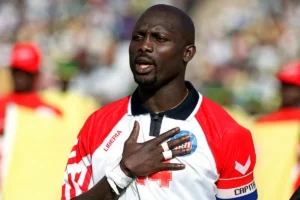
George Weah’s achievements place him among Africa’s all-time greats. The Liberian striker won the 1995 Ballon d’Or and enjoyed successful spells with clubs such as AC Milan, Paris Saint-Germain, and Monaco.
Despite his brilliance, Liberia never qualified for the World Cup during his career. Weah often carried the hopes of an entire nation almost single-handedly.
His impressive club résumé includes league titles in Italy and France, along with domestic cup triumphs. Beyond football, he later served as president of Liberia, further cementing his legacy.
6. Ryan Giggs (Wales)

Ryan Giggs built one of the most decorated careers in football history. The Manchester United legend won countless trophies and made over 900 appearances for the club.
At an international level, however, Wales struggled to compete with Europe’s elite. The nation had not appeared at a World Cup since 1958, decades before Giggs was born, and failed to qualify throughout his career. Despite his immense success in club football, the Welsh winger never played in the tournament.
7. Valentino Mazzola (Italy)

Valentino Mazzola, captain of the legendary Grande Torino side, is considered by many to be among Italy’s finest-ever players. Tragically, his life was cut short in the 1949 Superga air disaster, which claimed the lives of the entire Torino team.
READ ALSO: 10 new rules that will change football at the 2026 FIFA World Cup
Mazzola’s international career spanned from 1942 to 1949, a period during which World Cups were suspended due to World War II. Had he lived, many believe he would have played a pivotal role for Italy at the 1950 World Cup.
8. Duncan Edwards (England)

Duncan Edwards was regarded as one of the most promising talents English football had ever produced. Blessed with exceptional strength, intelligence, and versatility, he appeared destined for greatness.
Edwards played a key role in England’s qualification campaign for the 1958 World Cup but tragically died at the age of 21 following the Munich air disaster. Many football historians believe he would have become one of England’s greatest captains and players had his career not been cut short.
9. László Kubala (Hungary/Czechoslovakia/Spain)
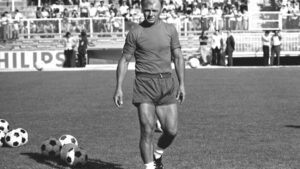
Barcelona legend László Kubala was one of the most technically gifted forwards of his generation. His career was shaped by political upheaval and shifting national allegiances, leading him to represent three different countries.
Although he travelled with Spain to the 1962 World Cup, injury prevented him from playing. Like Di Stéfano, Kubala saw circumstances beyond his control deny him a place on the World Cup stage despite his immense talent.
10. Mohamed Aboutrika (Egypt)

Mohamed Aboutrika is widely regarded as one of Africa’s finest attacking midfielders. The Egyptian icon enjoyed tremendous success at the continental level, helping his country win the Africa Cup of Nations in 2006 and 2008.
Unfortunately, his international career coincided with Egypt’s lengthy absence from the World Cup.
Despite earning more than 100 caps and scoring 38 goals for his country, Aboutrika never had the opportunity to showcase his talents at football’s premier tournament. Nevertheless, he remains one of the most admired figures in African football history.
The FIFA World Cup has celebrated countless football legends, but not every great player has had the opportunity to grace its stage.
Whether through injury, national team limitations, political circumstances, or tragic events, these ten football icons were denied a chance to compete in the sport’s most prestigious tournament.
Their absence from the World Cup does not diminish their greatness. Instead, it serves as a reminder that football’s history is filled with extraordinary talents whose legacies extend far beyond a single competition.