

The Government of Ghana has accepted several major recommendations submitted by the Constitutional Review Committee, paving the way for what could become the most extensive amendments to the 1992 Constitution in decades, subject to the constitutional approval process.
The approved proposals, outlined in the government’s White Paper presented by Attorney-General and Minister for Justice, Dr. Dominic Ayine, seek to strengthen democratic governance, improve accountability, and modernize key state institutions.
The reforms span several areas of governance, including the presidency, parliament, the judiciary, political parties, local government, and the country’s electoral system.
Among the most notable proposals are extending the tenure of the President and Members of Parliament from four to five years, reducing the minimum age for presidential candidates from 40 to 35 years, placing constitutional limits on the number of ministers and MPs, requiring the President to pay taxes on salary and allowances, and introducing the election of all Metropolitan, Municipal and District Chief Executives (MMDCEs).
The government has also endorsed reforms aimed at enhancing internal democracy within political parties, expanding eligibility for dual citizens to hold certain public offices, strengthening the judiciary, and setting strict constitutional timelines for resolving presidential election petitions.
Below are the 10 key constitutional reform proposals accepted by the government.
1. Five-Year Terms for the President and Parliament
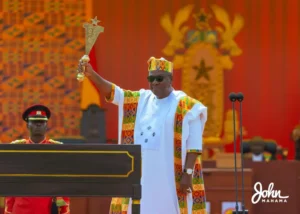
The government has approved a proposal to extend the tenure of both the president and parliament from four years to five years.
According to the proposal, the change is intended to provide governments with sufficient time to develop, implement, and evaluate policies while reducing the frequency of national elections.
2. Lower Presidential Age Requirement
The minimum age required to contest the presidency will be reduced from 40 years to 35 years.
Although the Constitutional Review Committee recommended lowering the age to 30 years, the government settled on 35 years to encourage greater youth participation while maintaining a level of maturity and leadership experience.
3. Changes to Presidential Election Timelines
The reforms also introduce new timelines for presidential elections and election disputes.
Under the proposal:
- Presidential elections will be conducted during the first week of November on dates determined by the Electoral Commission through a constitutional instrument.
- Election petitions must be filed within 14 days after the declaration of results.
- The Supreme Court will be required to determine all presidential election petitions within 30 days.
- The Electoral Commission must provide all relevant election materials and data to the courts and parties involved in election disputes.
4. President to Pay Taxes
The government has approved the removal of the president’s tax exemption.
If implemented, the president will pay taxes on:
- Salary
- Allowances
- Applicable indirect taxes on goods and services
However, retirement gratuities and pension benefits for former presidents will remain tax-exempt.
5. Constitutional Limit on Ministers
A constitutional ceiling of 60 ministers will be introduced.
Future Presidents may appoint ministers either from Parliament or outside Parliament, provided the total number does not exceed the proposed limit.
6. Parliament to Be Capped at 300 Members

The government has endorsed a proposal to limit Parliament to a maximum of 300 members.
The current 276 constituency seats will remain unchanged, while 24 additional seats will be allocated through proportional representation to promote greater inclusion of:
- Women
- Persons with disabilities
- Young people
7. Expanded Public Office Opportunities for Dual Citizens
Ghanaians by birth who hold dual citizenship will be permitted to contest parliamentary elections without renouncing their foreign nationality.
They will also become eligible for several constitutional offices, including:
- Chief Justice
- Chairperson of the Electoral Commission
- Speaker of Parliament
The restriction preventing dual citizens from serving as president or vice-president will remain in force.
8. Judicial Reforms

The accepted recommendations include significant changes to the judiciary.
The Chief Justice will serve a single, non-renewable term of 10 years, subject to the mandatory retirement age.
The membership of the Supreme Court will also be limited to 19 justices, comprising the Chief Justice and 18 other Supreme Court Justices.
9. Strengthening Political Party Democracy
The government has endorsed measures aimed at improving internal democracy within political parties.
Registered political parties will be required to grant members in good standing equal voting rights in selecting presidential and parliamentary candidates.
A Political Parties Regulatory Commission will also be established to oversee:
- Registration and regulation of political parties
- Campaign financing
- Administration of the proposed Democracy Fund
- Compliance with political party regulations
10. Election of All MMDCEs
The government has accepted the proposal to elect all metropolitan, municipal, and district chief executives instead of implementing the process in phases.
Under the proposed system, the president will nominate five candidates, including at least two women. Following a vetting process, three candidates one of whom must be a woman will be shortlisted to contest the election for the position.
If approved through the constitutional amendment process, these reforms are expected to reshape Ghana’s governance framework by promoting greater accountability, strengthening democratic institutions, increasing political participation, and improving the effectiveness of public administration.