
The FIFA World Cup is celebrated as the greatest football tournament on earth. It has produced unforgettable goals, iconic players, and emotional moments that unite billions of fans worldwide.
However, alongside the glory and excitement, the tournament has also witnessed controversial decisions that still divide football fans decades later.
From questionable refereeing calls to disputed goals and controversial penalties, many supporters believe some teams were unfairly denied victory on football’s biggest stage.
But when discussing the biggest robbery in World Cup history, one match consistently dominates the conversation: South Korea vs Italy at the 2002 FIFA World Cup.
Why the 2002 World Cup Match Still Sparks Debate
The Round of 16 clash between Italy and South Korea during the 2002 FIFA World Cup remains one of the most controversial matches ever played.
Hosted jointly by South Korea and Japan, the tournament was already historic as the first World Cup held in Asia.
Italy entered the competition with a star-studded squad featuring legendary players such as Francesco Totti, Paolo Maldini, Gianluigi Buffon, Alessandro Del Piero, and Christian Vieri.
South Korea, managed by Guus Hiddink, had already impressed fans with their energetic performances.
However, the events that unfolded during the match left many football fans convinced that Italy had been robbed.
Controversial Refereeing Decisions
The game was officiated by Ecuadorian referee Byron Moreno, whose performance became the center of global criticism after the match.
Italy initially took the lead through Christian Vieri, but controversy quickly followed. South Korea was awarded a penalty early in the game, although goalkeeper Gianluigi Buffon managed to save it.
As the match progressed, Italy appeared to have a legitimate goal ruled out for offside. Many replays later suggested the decision was extremely questionable.
The biggest controversy came when Francesco Totti received a second yellow card for alleged simulation inside the penalty area during extra time. Many fans and analysts argued there was clear contact and that the Italian playmaker should not have been sent off.
Moments later, South Korea scored the golden goal through Ahn Jung-hwan, eliminating Italy from the tournament.
Accusations of Bias and Corruption
Following the match, outrage erupted across Italy and among neutral football fans worldwide. Italian newspapers described the game as a “theft” and accused FIFA of favouring the host nation.
Byron Moreno became one of the most criticised referees in World Cup history. Years later, his reputation suffered further after he was suspended for unrelated refereeing misconduct and later faced legal troubles outside football.
Although no official evidence of match-fixing in the Italy vs South Korea game was ever proven, suspicions have never completely disappeared.
Even today, many supporters still refer to the match as the biggest robbery in World Cup history.
Other Controversial World Cup “Robberies”
Although the 2002 Italy vs South Korea match is often considered the most infamous, several other World Cup controversies are frequently mentioned in debates.
England vs Argentina – 1986
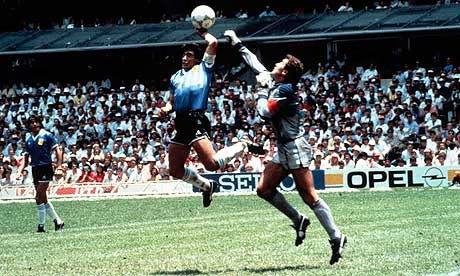
Diego Maradona’s famous “Hand of God” goal remains one of football’s most controversial moments. The Argentine legend punched the ball into the net, but the referee allowed the goal to stand. Argentina eventually defeated England 2-1 and went on to win the World Cup.
Ironically, Maradona also scored one of the greatest goals in football history during the same match.
Germany vs England – 2010
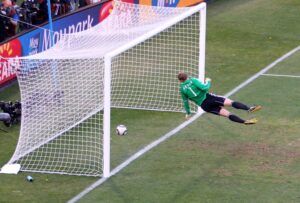
England were denied a clear goal when Frank Lampard’s shot crossed the goal line against Germany. Despite television replays showing the ball had clearly gone in, the goal was not awarded because goal-line technology was not yet in use.
The incident increased pressure on FIFA to introduce modern technology into football officiating.
Argentina vs Netherlands – 1978 Final
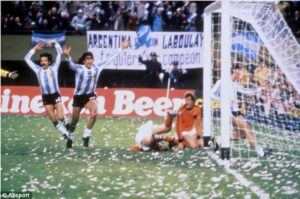
Some football historians believe the 1978 World Cup final favoured host nation Argentina under suspicious political circumstances. Allegations surrounding refereeing decisions and external political influence continue to fuel conspiracy theories decades later.
However, no definitive proof has ever emerged.
How Controversial Decisions Changed Football
Many major football rule changes were introduced because of controversial World Cup incidents.
For example, Frank Lampard’s disallowed goal in 2010 accelerated the introduction of goal-line technology. Similarly, growing criticism of refereeing decisions eventually contributed to the implementation of VAR (Video Assistant Referee).
FIFA has increasingly focused on improving officiating standards to reduce errors in high-stakes matches. While mistakes can never be fully eliminated, technology has made football decisions more accurate than in previous decades.
Why Fans Never Forget World Cup Controversies
World Cup matches carry enormous emotional and national significance. A single controversial decision can change the course of football history, affect player legacies, and deny nations their dreams.
Unlike club football, World Cups happen only once every four years. For many players, it is a once-in-a-lifetime opportunity. That is why controversial defeats remain painful for generations of fans.
The debate over the biggest robbery in World Cup history may never truly end because football is deeply emotional and subjective. Different fans point to different matches depending on their loyalties and perspectives.
Still, the 2002 clash between Italy and South Korea remains the most frequently cited example whenever football fans discuss unfair World Cup eliminations.
Football controversy is part of what makes the World Cup so dramatic and memorable. While some moments create joy and celebration, others leave bitterness and endless debate.
Whether it was Maradona’s “Hand of God”, Lampard’s ghost goal, or Italy’s controversial exit in 2002, these incidents continue to shape football history and fan culture.
For many supporters around the world, the Italy vs South Korea match at the 2002 FIFA World Cup remains the clearest example of what they call the biggest robbery in World Cup history.