
The World Health Organization (WHO) has officially classified the Ebola outbreak linked to the Bundibugyo virus in the Democratic Republic of Congo (DRC) and Uganda as a Public Health Emergency of International Concern (PHEIC).
The declaration follows rising fears over the spread of the disease across borders and its high fatality rate.
In a statement shared with the Ghana News Agency, WHO explained that the decision was reached after consultations with the affected countries under the International Health Regulations (IHR).
According to the organisation, the outbreak was initially identified in the Mongbwalu Health Zone in the Ituri Province of eastern DRC, where health officials recorded a number of severe illnesses and deaths, including infections among healthcare personnel.
Tests conducted by the Institut National de Recherche Biomédicale (INRB) in Kinshasa confirmed Bundibugyo virus disease (BVD) in eight out of 13 blood samples taken from the Rwampara Health Zone in Ituri Province.
The DRC Ministry of Public Health, Hygiene and Social Welfare officially announced the country’s 17th Ebola outbreak on May 15.
Uganda also confirmed an outbreak after authorities detected an imported case involving a Congolese citizen who later died in Kampala.
WHO noted that previous outbreaks caused by the Bundibugyo virus recorded mortality rates of between 30 and 50 percent.
The organisation further explained that, unlike the more common Ebola strain, there are currently no approved vaccines or specific treatments for Bundibugyo virus disease, although early supportive treatment greatly improves patients’ chances of survival.
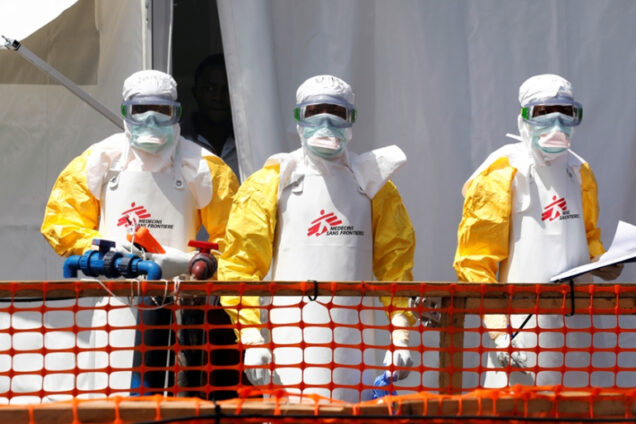
Authorities in both countries have intensified emergency response measures, including deploying rapid response teams, improving surveillance systems, expanding laboratory testing, strengthening infection prevention protocols, and carrying out public awareness campaigns.
Treatment and isolation centres are also being set up in affected communities.
WHO stated that it is working closely with both countries to coordinate response activities, manage cases, and reinforce cross-border preparedness efforts aimed at preventing further spread of the virus.
The organisation has additionally issued public health guidance to countries around the world to improve preparedness and reduce the risk of international transmission.
Ebola is a serious and often deadly disease spread through direct contact with infected bodily fluids, contaminated objects, or infected animals.
Common symptoms include fever, body weakness, muscle pain, vomiting, diarrhoea, and in severe cases, internal and external bleeding.
Health experts are advising people in affected areas to maintain strict hygiene practices, avoid contact with suspected patients, and seek medical attention immediately if symptoms appear.