
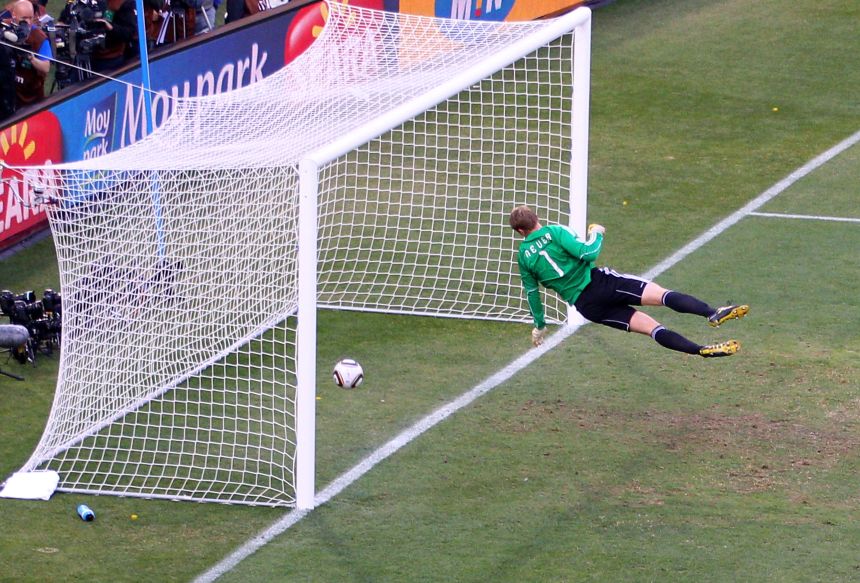
The FIFA World Cup has produced some of the most iconic moments in sporting history. Fans remember Diego Maradona’s “Hand of God”, Zinedine Zidane’s headbutt, and Lionel Messi finally lifting the trophy in Qatar.
Yet beyond these famous headlines lie lesser-known incidents that quietly altered the course of football history.
Some of these moments changed the laws of the game, transformed tactical approaches, influenced refereeing standards, or reshaped international football forever. While they may not receive the same attention as legendary goals and dramatic finals, their impact continues to be felt across the modern game.
Here are ten forgotten World Cup moments that changed football forever.
1. The Battle of Santiago (Chile 1962)
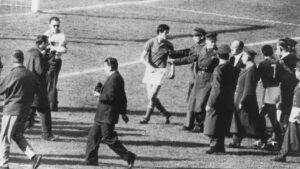
The infamous clash between Chile and Italy during the 1962 World Cup remains one of the most violent matches ever played.
Political tensions, hostile media coverage, and aggressive challenges turned the game into chaos. Players exchanged punches, police entered the pitch multiple times, and two Italians were sent off.
READ ALSO: 10 great players who never played at the FIFA World Cup
The match exposed the limitations of refereeing and highlighted the need for stricter disciplinary measures. The controversy eventually contributed to the modernisation of officiating and increased calls for stronger control over player behaviour.
Today, such scenes would likely result in multiple red cards and lengthy suspensions.
2. North Korea Stuns Italy (England 1966)
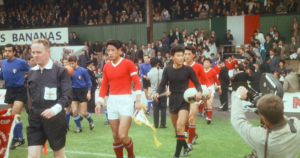
One of the greatest upsets in football history occurred when North Korea defeated two-time champions Italy 1-0 in Middlesbrough.
The victory shocked the football world and demonstrated that smaller nations could compete with traditional powers on the biggest stage.
Before then, many believed World Cup success was reserved for football’s elite countries. North Korea’s triumph inspired emerging football nations and helped pave the way for future underdog stories involving Cameroon, Senegal, Costa Rica, and Morocco.
3. The Birth of the Yellow and Red Cards (Mexico 1970)
The modern disciplinary system used in football was born because of confusion during previous World Cups.
English referee Ken Aston noticed communication problems between officials and players who spoke different languages. Inspired by traffic lights, he proposed yellow cards as warnings and red cards for dismissals.
READ ALSO: FIFA World Cup: The Match that almost started a war
The system debuted at the 1970 World Cup and revolutionised football administration.
Today, yellow and red cards are among the most universally recognised symbols in sport.
4. Poland’s Third-Place Run (West Germany 1974)
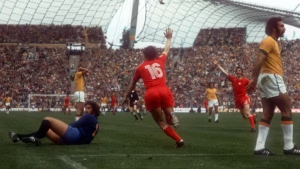
While Johan Cruyff’s Netherlands captivated audiences with Total Football, Poland quietly enjoyed a remarkable tournament.
Led by Grzegorz Lato, Poland finished third and showcased a dynamic attacking style that combined technical ability with tactical flexibility.
Their success challenged the dominance of Western European and South American football powers and encouraged greater respect for Eastern European football development.
Lato also finished as the tournament’s top scorer, proving that football excellence could emerge from unexpected places.
5. Algeria’s Historic Victory and the “Disgrace of Gijón” (Spain 1982)
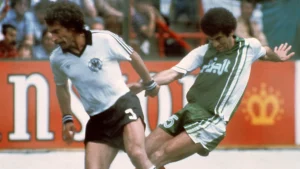
Algeria stunned West Germany 2-1 in one of the World Cup’s biggest shocks.
However, their achievement was overshadowed by the infamous final group-stage match between West Germany and Austria. After Germany scored early, both teams appeared content with a result that ensured their qualification at Algeria’s expense.
The outrage was immediate.
As a direct consequence, FIFA introduced simultaneous kick-offs for final group-stage matches, a rule that remains in place today and protects the integrity of competitions.
6. Roger Milla’s Dance Celebration (Italy 1990)
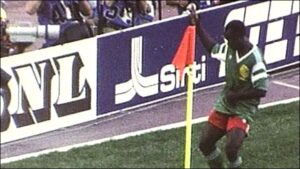
Cameroon’s Roger Milla became a global sensation during the 1990 World Cup.
At 38 years old, he inspired Cameroon to become the first African nation to reach the quarter-finals. Yet his impact extended beyond football tactics and results.
His joyful dance celebrations at the corner flag became a worldwide phenomenon and helped change perceptions of African football.
READ ALSO: What is happening with World Cup ticket prices?
Milla’s success opened doors for future generations of African stars and accelerated global appreciation of the continent’s football talent.
7. The Goalkeeper Revolution Begins (USA 1994)

The 1994 World Cup arrived shortly after FIFA introduced the back-pass rule, which prevented goalkeepers from handling deliberate passes from teammates.
The tournament became a showcase for a new style of goalkeeper.
Instead of merely stopping shots, keepers now needed technical ability, passing skills, and composure under pressure.
This shift eventually gave rise to the modern “sweeper-keeper” role perfected by players such as Manuel Neuer and Ederson.
Football’s tactical evolution owes much to this transformative period.
8. Senegal Defeats France (Korea/Japan 2002)

The opening match of the 2002 World Cup delivered another monumental shock.
Tournament debutants Senegal defeated reigning champions France 1-0 thanks to a goal from Papa Bouba Diop.
The victory signalled a changing global football landscape. African nations were no longer viewed as merely entertaining outsiders but as genuine contenders capable of competing with elite teams.
Senegal’s remarkable run to the quarter-finals inspired confidence throughout African football and contributed to growing investment in talent development across the continent.
9. The Technology Debate After Lampard’s Ghost Goal (South Africa 2010)
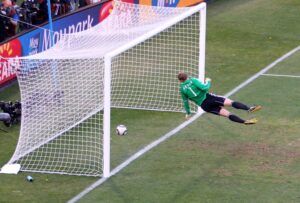
England’s Frank Lampard scored what appeared to be a clear goal against Germany in the Round of 16.
The ball crossed the line by a significant margin, yet officials failed to award the goal.
The incident sparked worldwide criticism and intensified demands for technological assistance in football.
Within a few years, FIFA approved goal-line technology, ensuring similar mistakes could be avoided in future tournaments.
The controversial decision became a turning point in football’s embrace of technology.
10. Costa Rica’s Miracle Run (Brazil 2014)

Few expected Costa Rica to survive a group containing Uruguay, Italy, and England.
Instead, they topped the group and advanced all the way to the quarter-finals.
Their success challenged long-standing assumptions about football hierarchies and demonstrated the growing competitiveness of nations outside the traditional elite.
Costa Rica’s achievement encouraged smaller countries to believe that intelligent coaching, organisation, and teamwork could overcome financial and historical disadvantages.
The lesson continues to resonate in modern international football.
Why These Moments Still Matter Today
World Cup history is often told through finals, trophies, and legendary superstars. However, football’s evolution has frequently been shaped by moments that receive far less attention.
The Battle of Santiago influenced officiating standards. Algeria’s misfortune changed tournament scheduling. Lampard’s disallowed goal accelerated technological innovation. Roger Milla helped transform global perceptions of African football.
These events may not dominate highlight reels, but their consequences continue to shape the modern game watched by billions around the world.
As the World Cup continues to evolve, future generations will likely discover that some of football’s most important turning points were not necessarily the most famous. Sometimes, the moments that change the sport forever are the ones history almost forgets.