

James Dewey Watson is one of the most prominent and controversial figures in the history of modern science.
Best known as the co-discoverer of the structure of DNA, Watson’s work revolutionised biology and medicine.
His contributions to genetics and molecular biology earned him global recognition and a place among the most influential scientists of the 20th century.
Yet, his later career has also been marked by controversy due to some of his public statements. This article explores his life story, career, achievements, family life, and estimated net worth.
Early Life and Education
James Dewey Watson was born on April 6, 1928, in Chicago, Illinois, USA, to James D. Watson Sr. and Jean Mitchell. His father worked as a businessman, and his family was of Scottish and Irish descent. From a young age, Watson displayed an exceptional intellect and an insatiable curiosity about nature and science.
He attended Horace Mann Grammar School and later enrolled at the South Shore High School. At just 15, Watson won a scholarship to the University of Chicago, where he earned a Bachelor of Science degree in Zoology in 1947.
Driven by his fascination with genetics, he pursued graduate studies at Indiana University, where he earned his Ph.D. in Zoology in 1950 under the supervision of Salvador Luria, a Nobel Prize-winning biologist.
Scientific Career and Discovery of DNA
Watson’s early research focused on bacteriophages (viruses that infect bacteria), but his scientific interests soon turned toward understanding the molecular structure of genes.
In 1951, he joined the University of Cambridge’s Cavendish Laboratory in England, where he met Francis Crick. The two scientists formed one of the most famous partnerships in scientific history.
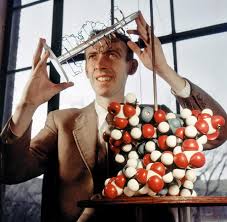
Using data from Rosalind Franklin and Maurice Wilkins, Watson and Crick developed a model of the double-helix structure of DNA in 1953. Their discovery explained how genetic information is stored, copied, and passed from one generation to another — a monumental breakthrough in biology.
For their pioneering work, Watson, Crick, and Wilkins were awarded the 1962 Nobel Prize in Physiology or Medicine. Their discovery laid the foundation for molecular biology, genetic engineering, and modern biotechnology, influencing everything from medical research to forensic science.
Later Career and Achievements
After his groundbreaking discovery, Watson continued to play a major role in advancing molecular genetics. He joined the Harvard University faculty in 1956, where he taught biology and conducted research until 1976.
In 1968, he published The Double Helix: A Personal Account of the Discovery of the Structure of DNA, an autobiographical account that provided a candid look into the competitive and emotional aspects of scientific research. Though controversial for its portrayal of colleagues, the book became a classic and remains one of the best-selling science memoirs of all time.

Watson later became the Director of Cold Spring Harbor Laboratory (CSHL) in New York, one of the world’s leading research institutions in genetics and cancer research. Under his leadership, CSHL expanded significantly and became a hub for molecular biology innovation.
He also played a key role in the Human Genome Project, which aimed to map the entire human genetic code a monumental achievement in modern science.
Controversies
Despite his scientific brilliance, James Watson has faced criticism for several controversial remarks related to race, intelligence, and genetics. His statements led to his suspension and eventual retirement from administrative roles at CSHL.
Many scientific institutions distanced themselves from his views, emphasizing that his personal opinions did not reflect the consensus of the scientific community.
Personal Life and Family
James Watson married Elizabeth Lewis in 1968. Elizabeth, often described as supportive and private, stood by her husband throughout his long and eventful career. The couple has two sons, Rufus and Duncan Watson.
Their son Rufus was diagnosed with schizophrenia, which deeply affected the family and influenced Watson’s interest in neuroscience and psychiatric genetics. The family has been relatively private, avoiding much public attention outside Watson’s professional life.
Net Worth
As of estimates from various sources, James Watson’s net worth is believed to be around $15 million to $20 million. His income came primarily from his long academic career, royalties from his books, and positions held in prestigious scientific institutions.
However, Watson made headlines in 2014 when he auctioned his Nobel Prize medal for $4.1 million, claiming he wanted to raise funds for scientific research and charitable causes. Interestingly, the buyer Russian billionaire Alisher Usmanov later returned the medal to Watson, calling it an act of respect for his scientific contributions.
Legacy
Despite the controversies surrounding his later years, James Watson’s legacy in science remains immense. His work on the structure of DNA revolutionized biology, paving the way for major advancements in genetics, medicine, and biotechnology.
He is remembered as a pioneering scientist whose discoveries transformed human understanding of life itself. While his remarks have overshadowed some of his achievements, there is no denying that Watson’s contribution to molecular biology remains one of the most significant milestones in scientific history.