

One year into President John Dramani Mahama’s second term, his administration has begun to take clearer shape. Cabinet performance is now measurable not by promises, but by delivery, responsiveness, policy direction, and public confidence.
This ranking assesses ministers based on visibility, policy impact, execution efficiency, crisis management, and public engagement. It reflects performance within the first year of governance, not historical reputation.
10. Agnes Naa Momo Lartey – Minister for Gender, Children and Social Protection

Agnes Naa Momo Lartey has maintained strong responsiveness to social issues, particularly child protection, gender-based violence, and vulnerable group advocacy.
While the Gender Ministry does not command large fiscal space compared to economic ministries, her visibility and engagement with stakeholders have kept gender issues relevant in national discourse.
However, structural reforms in social protection systems remain gradual. The ministry has focused more on advocacy and engagement than sweeping policy shifts, which places her at the lower end of this ranking but still among the top performers.
9. Samuel Okudzeto Ablakwa – Minister for Foreign Affairs
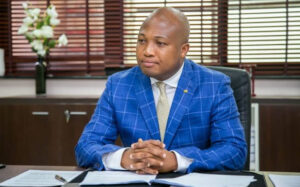
Ablakwa has distinguished himself through accessibility and diplomatic visibility. His tenure has focused on repositioning Ghana’s image abroad, strengthening bilateral ties, and engaging the diaspora.
He has brought energy and communication clarity to the Foreign Affairs Ministry. That said, foreign policy impact is often long-term and less immediately measurable. While his diplomatic engagements have been active, tangible economic or strategic breakthroughs are still evolving.
8. Dominic Akuritinga Ayine – Attorney General and Minister for Justice
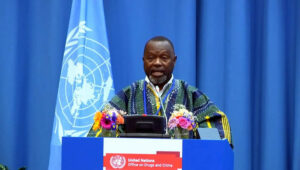
Dominic Ayine’s role has been pivotal in reinforcing legal reform and reviewing controversial governance decisions inherited from the previous administration. His emphasis on constitutionalism and prosecutorial review has strengthened perceptions of institutional correction.
However, legal processes are inherently slow. While his intellectual leadership is evident, landmark judicial outcomes are still pending, which limits immediate measurable impact.
7. Kwame Governs Agbodza – Minister for Roads and Highways

Infrastructure delivery has historically shaped public opinion, and Agbodza’s performance has been pragmatic. The Roads Ministry has prioritised stalled projects and restructured contractor payment frameworks to address arrears.
Although large-scale new road launches have been cautious due to fiscal discipline, steady rehabilitation efforts and improved contract transparency have earned him credit.
6. Eric Opoku – Minister for Food and Agriculture
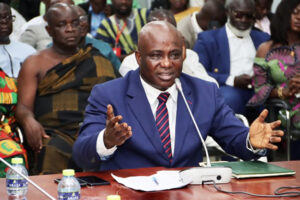
Agriculture remains central to inflation control and rural stability. Eric Opoku’s focus on input accessibility, farmer engagement, and food production expansion has contributed to relative food supply stability compared to previous volatility.
The ministry faces climate vulnerability challenges, but improved coordination with farmer groups and renewed emphasis on domestic production mark a steady, if not dramatic, improvement.
5. Haruna Iddrisu – Minister for Education
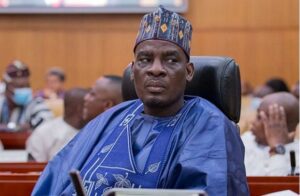
Education reform under Haruna Iddrisu has focused on system stabilisation rather than radical change. Curriculum review, teacher engagement, and tertiary financing reforms have been central themes.
His strength lies in administrative control and stakeholder management. However, long-term educational transformation takes time to manifest, keeping him just outside the top four.
4. Muntaka Mohammed-Mubarak – Minister for the Interior
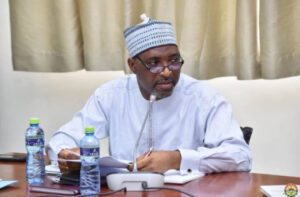
In a period marked by regional instability and rising concerns over internal security, Muntaka Mohammed-Mubarak has played a critical role in maintaining domestic order. His leadership at the Interior Ministry has focused on strengthening coordination among the police, immigration, and other security agencies while reinforcing public safety measures.
3. Kofi Adams – Minister for Youth and Sports
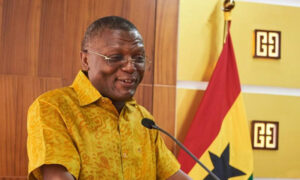
Sports administration has undergone renewed scrutiny and restructuring. Kofi Adams has prioritised transparency in sports financing and governance reforms within national sporting bodies.
His early tenure has focused on restoring confidence in sports management institutions. While international competitive results are still developing, administrative reforms position the sector for long-term recovery.
2. Julius Debrah – Chief of Staff

Though not a sector minister, Julius Debrah’s coordination role is central to the administration’s performance. He has improved cabinet cohesion and policy alignment across ministries.
Effective governance often depends on internal discipline. Debrah’s influence is visible in reduced public contradictions among ministers and more unified government messaging.
1. Cassiel Ato Forson – Minister for Finance

At the top of this ranking stands Ato Forson. The Finance Ministry carries the heaviest burden in a recovering economy, and performance here directly shapes national perception.
Within a year, the ministry has prioritised macroeconomic stabilisation, fiscal discipline, debt restructuring continuity, and inflation management. While structural economic recovery remains ongoing, stability indicators show improvement compared to the final years of the previous administration.
The Finance Minister’s approach has emphasised cautious expenditure, investor confidence rebuilding, and improved revenue enforcement. Economic recovery is far from complete, but relative stabilisation in a short period places him at number one.
Final Assessment
Mahama’s second-term cabinet shows stronger coordination and more measured communication compared to previous cycles. The administration has avoided excessive public confrontation, focused on stabilisation rather than populism, and prioritised institutional recalibration.
However, most ministers are still in the “foundation phase” rather than transformative execution. The true test will come in sustained delivery of job creation, industrial growth, infrastructure expansion, and deeper institutional reform.
For now, the strongest performances are concentrated in economic management and administrative coordination. Long-term judgement will depend on whether stabilisation translates into structural growth.
This ranking reflects current performance momentum, not permanent status