
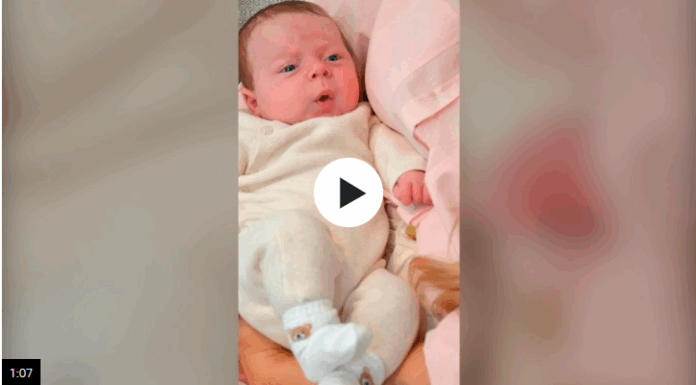
A baby boy has made medical history as the first child in the UK to be born after his mother received a womb transplant from a deceased donor.
Grace Bell, in her 30s, was born without a functioning womb and describes her 10-week-old son, Hugo, as “nothing short of a miracle.” She and her partner, Steve Powell, from Kent, expressed deep appreciation for the donor and her family, praising their generosity and selflessness.
They also acknowledged the specialist teams in Oxford and London who guided them through the complex process.
Medical experts involved in the case have described the birth as a landmark achievement that could open new possibilities for women with similar conditions.
Hugo was delivered just before Christmas 2025 at Queen Charlotte’s and Chelsea Hospital in west London, weighing just under 7lbs. Bell has MRKH syndrome, a rare condition affecting around one in 5,000 women in the UK meaning she was born without a womb and does not menstruate, though her ovaries function normally. At 16, she was told she would never be able to carry a pregnancy.
For years, the couple’s only realistic options were surrogacy or the possibility of a transplant. When Bell received news that a suitable womb had become available, she said she felt shocked and overwhelmed with excitement, while also reflecting on the profound generosity of the donor’s family.
She said she thinks about the donor daily and hopes the family finds comfort in knowing their daughter’s decision allowed her to experience motherhood. “A part of her will always live on,” she said.
The 10-hour transplant surgery took place in June 2024 at The Churchill Hospital in Oxford. Months later, the couple underwent IVF treatment at The Lister Fertility Clinic in London, followed by an embryo transfer that led to the pregnancy.
Recalling the moment after Hugo’s birth, Bell said seeing his face for the first time felt almost unreal, as though she needed to wake up from a dream.
Her case forms part of a UK clinical research trial involving 10 womb transplants from deceased donors. Three such operations have been completed so far, but Hugo is the first baby born through this route.
Earlier in 2025, baby Amy became the first child in the UK born following a womb transplant from a living donor. Her mother had received her older sister’s womb in 2023. Five additional transplants from close living relatives are planned.
The team behind both births has worked toward this breakthrough for decades. Professor Richard Smith, a consultant gynaecologist at Imperial College Healthcare NHS Trust and founder of Womb Transplant UK, has been researching the procedure for over 25 years and was present at Hugo’s birth. In gratitude, Bell and Powell gave their son the middle name Richard.
Doctors have indicated that if the couple choose to have a second child, the transplanted womb will later be removed to prevent Bell from needing lifelong immunosuppressant medication.
Transplant surgeon Isabel Quiroga described Hugo’s arrival as a major step forward for organ transplantation in the UK, noting that very few babies in Europe have been born following womb donations from deceased donors.
The ongoing trial aims to determine whether the procedure could eventually become a standard treatment for women without a viable womb.
Experts also emphasized that children born after such transplants have no genetic connection to the donor. Globally, more than 100 womb transplants have been performed, resulting in over 70 healthy births.
Unlike other organ donations, womb donation requires specific consent from families who have already agreed to donate their relative’s organs. Under UK law, individuals are considered organ donors unless they choose to opt out.
The donor’s parents, who have chosen to remain anonymous, said they feel immense pride in their daughter’s legacy. In addition to donating her womb, she gave five other organs that helped four recipients. They said her decision has brought other families not only time and healing, but now new life as well.