
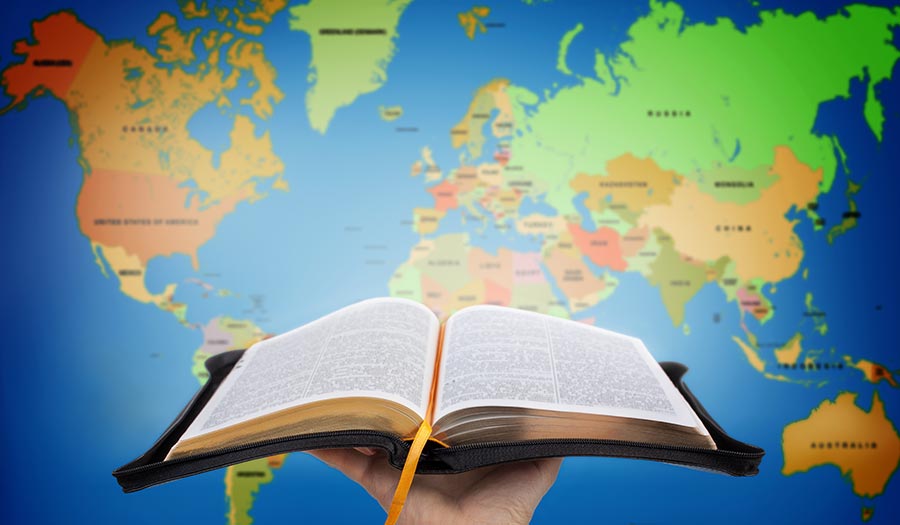
The Bible references many ancient lands and kingdoms that have either changed names or no longer exist in their original form.
Understanding these locations and their modern equivalents helps bring biblical narratives into clearer historical and geographical context.
Below is a breakdown of key biblical countries and what they are known as today.
Israel and Judah

Israel is one of the most significant lands in the Bible, originally referring to the kingdom established by the Israelites. Today, it exists as a modern nation, though its current borders differ from those in biblical times.
Judah, the southern kingdom after Israel split, is now largely part of modern Israel and the Palestinian territories. It plays a central role in many Old Testament accounts, especially in the lineage of King David and Jesus Christ.
Egypt
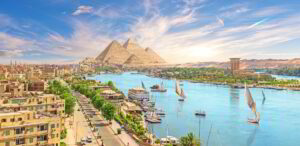
Egypt is one of the few places that has retained its name over thousands of years. It is prominent in biblical history, particularly in the story of Joseph and the Israelites’ enslavement and eventual exodus led by Moses.
Assyria and Babylon (Modern Iraq)
Assyria was a powerful empire known for conquering the northern kingdom of Israel. Its territory is now mainly within modern Iraq, as well as parts of Syria and Turkey.
Babylon, famous for the Babylonian exile of Judah, is also located in present-day Iraq. Its ruins remain a key archaeological site near the city of Hillah.
Persia (Modern Iran)

Persia is now known as Iran. The Persian Empire played a crucial role in biblical history by allowing the Jewish people to return to Jerusalem and rebuild the temple after exile.
Canaan
Canaan was the land promised to Abraham and his descendants. Today, it corresponds to areas within modern Israel, Palestine, Lebanon, and parts of Jordan and Syria.
Philistia (Modern Gaza Area)
Philistia was home to the Philistines, who frequently clashed with the Israelites. This region is now part of the Gaza Strip. The modern name “Palestine” is believed to have been derived from “Philistia.”
Moab and Ammon (Modern Jordan)
Moab and Ammon are both located in present-day Jordan. These neighboring nations had complex relationships with Israel, ranging from conflict to cooperation.
Edom
Edom is also situated in modern southern Jordan. It was inhabited by the descendants of Esau and is frequently mentioned in prophetic books.
Rome (Modern Italy)
Rome is now the capital of Italy. During the New Testament era, the Roman Empire ruled over much of the known world, including Judea, and played a key role in the spread of Christianity.
Galatia and Ephesus (Modern Turkey)
Galatia and Ephesus are both located in present-day Turkey. These areas were important centers of early Christianity and recipients of Paul’s letters.
Syria (Aram)
Syria, referred to as Aram in the Bible, still exists today, though its borders have evolved over time. It played a role in several biblical conflicts and alliances.
Ethiopia
Ethiopia is mentioned in the Bible, particularly in the New Testament. While ancient references may include parts of Nubia (modern Sudan), Ethiopia remains one of the few nations to retain its biblical name.
Many of the countries mentioned in the Bible still exist today, though often under different names or within changed borders.
By connecting ancient locations with modern geography, readers can better understand the historical setting of biblical events.
Insights from archaeology, historical records, and biblical scholarship continue to help bridge the gap between the ancient world and today’s global map.