
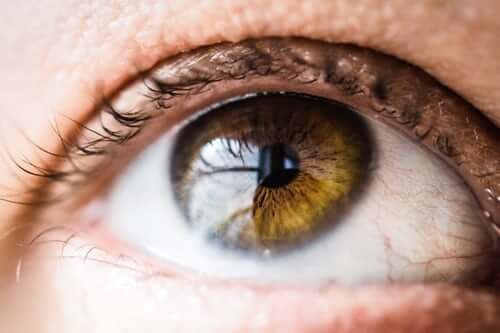
Photopsias are visual sensations of flashes of light, such as sparkles, streaks, or “lightning” patterns, occurring without an external light source. They can happen in one eye or both, may be brief or recurring, and can signal anything from a common age-related eye change to conditions that require urgent treatment.

What Photopsias Feel/Look Like
People often describe photopsias as:
- brief camera-flash-like light bursts
- sparkles or “glitter”
- flashes that occur more noticeable with eye movement or in dim light
The pattern and timing matter clinically: sudden new flashes, especially alongside other symptoms, should be taken seriously.
Causes of Photopsias
1) Vitreous traction (most common)
Inside the eye is a gel called the vitreous. As we age, the vitreous can shrink and pull slightly on the retina, a process called posterior vitreous detachment (PVD).
Why it causes flashes: traction or tugging on the retina can stimulate it, creating the perception of light.
Typical features:
- flashes may be brief and triggered by head/eye movement
- often comes with new or increasing floaters
- usually progresses gradually, but still warrants a retinal check
2) Retinal tear (important and potentially urgent)
A stronger or poorly tolerated traction can cause a tear in the retina.
Clues that raise concern:
- sudden onset of flashes
- dramatic increase in floaters
- flashes that persist or occur frequently
A retinal tear can sometimes be treated with laser/other procedures to prevent progression.
3) Retinal detachment (emergency)
If a tear allows fluid underneath the retina, the retina can detach, threatening vision.
Clues of detachment:
- a curtain/veil/shadow moving across vision
- increasing blur or distortion
- worsening peripheral vision
This is a time-sensitive emergency.
4) Ocular inflammation or disease
Inflammation inside the eye such as uveitis, can cause abnormal light sensations, along with other symptoms.
Possible accompanying symptoms
- eye pain or redness
- light sensitivity (photophobia)
- blurred vision.
5) Migraine-related visual phenomena
Some people experience photopsia symptoms with migraine due to temporary changes in the nervous system (including visual pathways).
Possible context clues:
- symptoms paired with headache
- zigzag patterns, shimmering, or visual distortion
- neurologic symptoms may occur (and if present, require urgent assessment)
(Note: because retinal problems can mimic migraine, clinicians often rule out eye emergencies first.)
6) Less common causes
Depending on the person’s history, photopsias can also be linked to other retinal/optic nerve conditions or systemic issues. These are less frequent but may require specialist evaluation.

Effects of Photopsias (What They Can Lead To)
The “effect” depends entirely on the underlying cause:
If due to vitreous traction/PVD
Flashes may decrease over time as the vitreous settles.
- Floaters may persist, but many people adapt.
- Vision is usually stable, but new photopsias can coincide with (or reveal) a tear, so monitoring and evaluation are important.
If due to a retinal tear Without treatment, a tear can progress to detachment.
- Effects can include:
- persistent flashes
- worsening floaters
- expanding visual distortion or loss of peripheral vision
If due to retinal detachment Potential effects can be severe:
- permanent vision loss
- loss of peripheral field (the “curtain”)
- distortion of central vision if the macula is affected
If due to migraine or inflammation
- episodic (migraine) or progressive without treatment (inflammation).
- Inflammation can damage ocular structures, so prompt treatment matters.
When to Seek Urgent Medical Care
Seek same-day emergency/urgent ophthalmology if photopsias are:
- new and occur with many new floaters
- associated with a veil/shadow
- accompanied by sudden vision loss or major blurring
- following an eye injury
- occurring in a high-risk eye (prior retinal tear/detachment, high myopia, etc.)
How will we avoid flash light in the eye
Some are normal and has no cause for alarm especially when it happens right after you look at a bright light and its mostly short lived . But the when it occurs longer than usual or without any trigger the you should see an Ophthalmologist.