
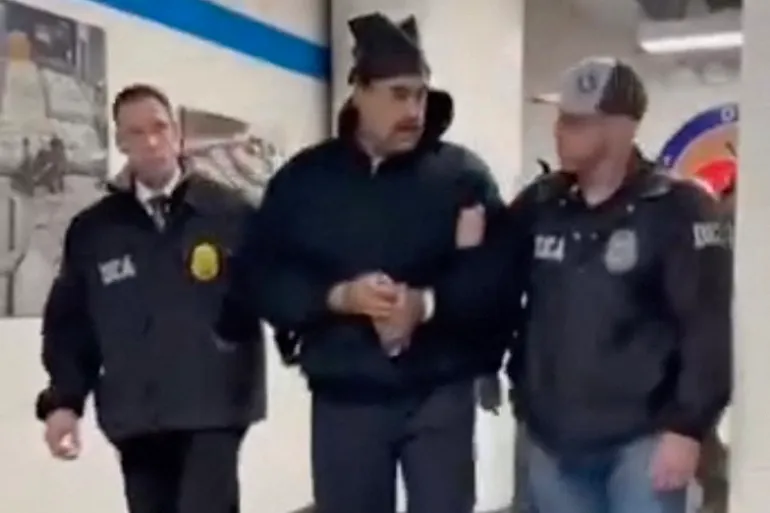
President Donald Trump announced on January 3, 2026, that U.S. forces captured Venezuelan leader Nicolás Maduro and his wife, Cilia Flores, in a dramatic military operation amid escalating tensions over drug trafficking and regime change.
Maduro, who rose from bus driver to president, had ruled Venezuela for over a decade under accusations of authoritarianism and electoral fraud.
This event marks a pivotal shift in U.S.-Venezuela relations, with Trump stating the U.S. will oversee a transition to restore stability.
Maduro’s Rise to Power
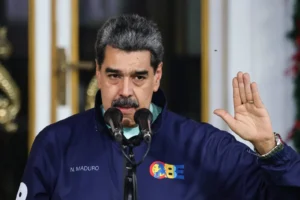
Nicolás Maduro Moros was born on November 23, 1962, in Caracas to a working-class family, starting his career as a bus driver and union leader before entering politics.
He joined Hugo Chávez’s movement in the 1990s, serving as National Assembly president, foreign minister from 2006 to 2012, and vice president until Chávez’s death in 2013, when Maduro assumed the presidency after a narrow election win.
Critics contested the 2013 vote, but Maduro consolidated power through decrees, loyal institutions like the Supreme Tribunal, and the military amid economic crises.
Venezuela Under Maduro’s Rule
Maduro’s tenure saw hyperinflation, shortages, and mass emigration of over seven million Venezuelans, with the UN documenting thousands of extrajudicial killings and human rights abuses.
Protests erupted in 2014 and 2017, met with repression; he created a Constituent Assembly in 2017 and won disputed elections in 2018 and 2024, sparking international non-recognition and a crisis where Juan Guaidó claimed interim presidency.
Economic policies shifted from socialism to limited market openings post-sanctions, but poverty and corruption persisted, with Maduro denying U.S.-orchestrated “economic warfare.”
U.S.-Venezuela Tensions Timeline
Relations soured early: U.S. sanctions began in 2006 over drug cooperation, intensified under Trump in 2017 with threats of military options, and peaked with 2019 oil embargoes recognizing Guaidó.
Biden eased some oil sanctions in 2023 before reinstating them; Trump relabeled Maduro a terrorist in 2025 and offered $50 million for his capture on narcoterrorism charges linked to the “Cartel of the Suns.” Failed covert ops, like recruiting Maduro’s pilot, preceded naval strikes from September 2025 killing over 100 in anti-drug actions.
Path to the 2026 Capture
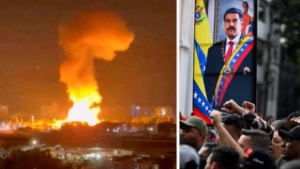
Escalation accelerated in late 2025 with U.S. vessel seizures, CIA operations, and 20+ strikes on alleged cartel boats by November, closing Venezuelan airspace per Trump. On January 3, 2026, U.S. airstrikes hit Caracas amid explosions, capturing Maduro and Flores, who were flown to Brooklyn’s Metropolitan Detention Center for drug and weapons charges.
Trump posted images of a blindfolded Maduro aboard the USS Iwo Jima, declaring U.S. governance until Vice President Delcy Rodríguez’s interim transition, though she denounced it as aggression.
International Reactions and Fallout
China urged Maduro’s release and an end to “toppling” efforts, while U.S. lawmakers backed the strikes; critics decried violations of sovereignty under UN Charter Article 2(4). Trump dismissed opposition figure María Corina Machado and eyed U.S. oil investments to “make Venezuela rich,” amid questions of regime elite collusion.
Maduro faces Manhattan arraignment soon, ending his rule amid global divides on the operation’s legality