
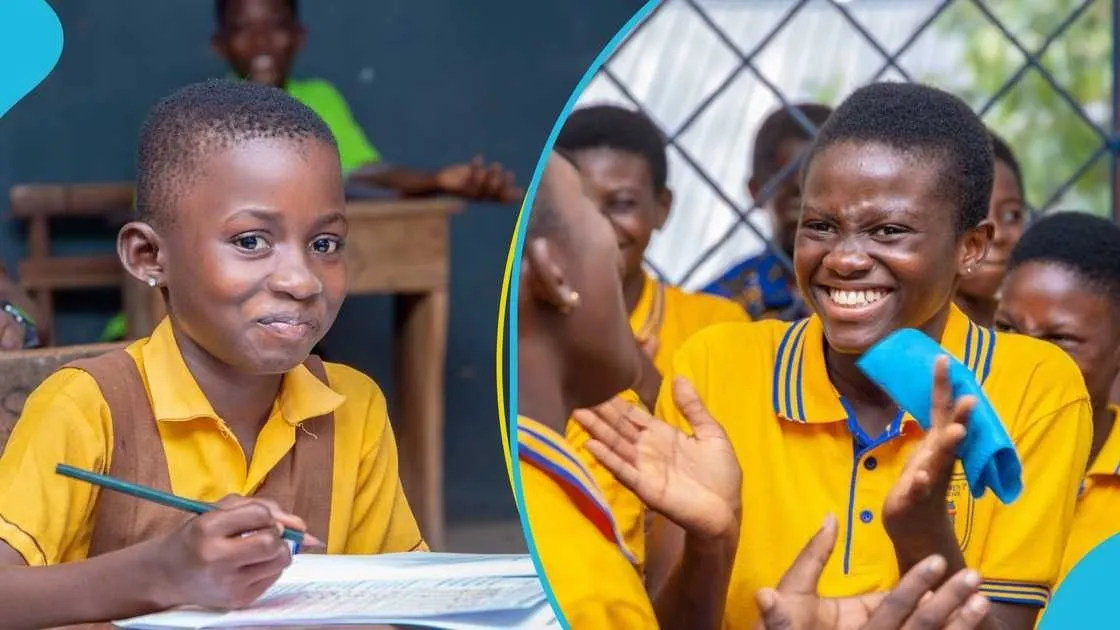
The Minister for Education, Haruna Iddrisu, has clarified that the government has no intention of making foreign languages such as Arabic and Chinese compulsory under Ghana’s revised basic school curriculum.
According to the minister, the proposed curriculum only introduces foreign languages as optional subjects at the upper primary level. The move is intended to provide pupils with additional language skills and prepare them for opportunities in an increasingly connected global environment.
READ ALSO: New teacher recruitment portal to be opened in November 2026
Speaking at the 68th Anniversary Speech and Prize-Giving Day of Pope John Senior High School and Minor Seminary (POJOSS) in Koforidua, Mr. Iddrisu explained that the initiative aims to develop globally competitive learners without adding compulsory subjects to the curriculum.
He noted that pupils who are interested in studying foreign languages, including French, Arabic, and Chinese, will be given the opportunity to do so where qualified teachers and the necessary learning resources are available.
The Minister’s remarks come after public debate over the revised curriculum proposed by the National Council for Curriculum and Assessment (NaCCA), which listed foreign languages among subjects to be introduced at the basic school level. Some members of the public had mistakenly assumed that Chinese and Arabic would become mandatory for all pupils.
Mr. Iddrisu dismissed those claims, stressing that foreign languages will remain optional, while English and Ghanaian languages will continue to serve as the core languages of instruction in basic education.
READ ALSO: November recruitment will be for 2023 COE Batch – Haruna Iddrisu
His clarification aligns with an earlier statement from the Ministry of Education, which indicated that Ghanaian languages will remain the primary medium of instruction from kindergarten to primary three, while both Ghanaian languages and English will be used from primary four to primary six.
The Ministry has maintained that the revised curriculum is aimed at improving literacy, strengthening foundational learning, preserving Ghana’s indigenous languages, and equipping learners with the knowledge and skills needed to succeed in a globalized world.